Convenience in the details: 5 modern CRM features worth noticing
October 12, 2026
7-minute read

Dmytro Suslov
Every day, teams need simple things: quickly finding what they need, coordinating work, and avoiding time-consuming repetitive tasks. That’s why CRM convenience is often found in the details—from a personalized menu to the ability to restore accidentally deleted data.
When choosing a CRM, people typically compare sales funnels, reports, and automation features. But the day-to-day experience also depends on simpler things: how easy it is to find the right section, understand a colleague’s availability, and see your upcoming plans.
If you have to search for tools, copy data, and clarify minor details every time, your work requires more attention—even when all the essential features are available.
That is why CRM convenience should be evaluated through everyday workflows. Let’s look at five features that make the workday easier and see how they are implemented in Uspacy.
Customize the menu to your needs: keep the tools you need always at hand
The same navigation setup is not always convenient for every employee. A sales manager most often opens deals and activities, while a project manager works primarily with tasks. That is why the ability to customize the menu to your needs makes everyday CRM work more convenient.
You can place the tools you use most often higher in the menu and remove those you rarely need from the active section. Custom sections help group the features you need, while links to external resources make it easy to open work documents and instructions.
For example, in Uspacy, you can change the order of sections and items, hide unnecessary elements, and move them to “Other.” You can also create a “Quick access” section, group Deals, Activities, and Tasks there, and add a link to a corporate document.
This allows each user to adapt the navigation to their daily workflow. At the same time, menu customization only changes how the menu looks, while access permissions for individual tools are managed separately.
Start with the sections you open most often. Arrange them so that every transition between tools is quick and requires no unnecessary searching.
Online indicators and statuses: clearer communication with colleagues
In team environments, you often need to quickly get a proposal approved or clarify task details. Before reaching out, it helps to know whether a colleague is currently in the system and what they are doing.
Two different signals are useful for this. The online indicator shows whether a colleague is currently online. The status they set themselves can indicate, for example, that they are in a meeting or on vacation. So even when someone is online, they may not be able to respond right away.
For example, in Uspacy, you can see whether an employee is currently online, while the employee list and chats show when they were last online. Users can set statuses such as “In a meeting,” “On vacation,” or “On the way,” or create a custom status and specify how long it should remain active.
A manager sees that a colleague is in a meeting and leaves a message with the relevant materials and approval deadline. There is no need to start the conversation with “Are you there?” and wait for a response before explaining the request.
Agree as a team on how to use statuses and how to communicate urgent matters. If a colleague is online, that does not necessarily mean they can respond immediately.
Integrations: CRM as part of your familiar work environment
It’s convenient when the services your team uses every day are connected to the CRM. This eliminates the need to transfer data manually and reduces the number of times employees have to switch between tools when working with customers.
For example, a website integration can transfer inquiries and orders directly to the CRM. An email integration makes it possible to manage correspondence alongside customer information. Telephony enables users to make calls and keep a record of conversations, while a calendar helps coordinate meetings and activities.
This makes it easier for a manager to continue working: review an inquiry, contact the customer, and schedule the next step. The relevant information remains connected to the original request.
For example, Uspacy offers options for all of these integrations, including connections with websites, email services, telephony, and calendars. And the open API allows developers to build custom integrations with other systems to meet specific business needs.
Start with the services your team most often transfers data between manually. Connecting them to your CRM can eliminate repetitive tasks from the workday.
AI-powered Home page: get oriented faster at the start of the day
The morning often begins with checking several sections: tasks, meetings, and customer commitments. A personalized workspace helps you see the big picture before you start working.
It’s useful when it shows scheduled activities, unfinished tasks, and items that already require attention. AI-powered suggestions complement this overview and help you think through the order of your next steps.
For example, the Uspacy Home page brings together data from tasks, activities, and the CRM. Users can see a personalized summary of the day, current and overdue tasks, upcoming activities, and AI recommendations.
A manager notices two scheduled meetings and an overdue proposal that still needs to be prepared. They review the details and decide to finish the document before the first customer conversation. They determine the final priorities themselves, taking any new circumstances into account.
In Uspacy, the personalized daily summary is updated once a day, while current details are available in the relevant cards and sections. Start the day with an overall view, then refine your plan as needed.
Trash bin: a way to restore accidentally deleted data
Accidentally deleting a deal or task can interrupt work with a customer. That’s why data recovery is an important CRM capability to consider.
The Trash bin allows supported elements to be restored before they are permanently deleted. It’s important to understand which data is stored there and who on the team has permission to restore it.
For example, in Uspacy, the Trash bin is available for Tasks, Activities, CRM elements, and Smart Objects. The Space owner and administrator can manage it.
If a manager accidentally deletes a Deal, an administrator can find it using search and filters. Once restored, it returns to its original section in the state it was in before deletion.
However, notes or documents that are deleted separately from a Deal are not moved to the Trash bin. Once an element is permanently deleted from the Trash bin, it cannot be restored.
Decide in advance who to contact if something is deleted by mistake. This will help the team get back to work quickly while recovery is still possible.
Conclusion
CRM convenience is reflected in everyday actions: finding the right tool, reaching out to a colleague, accessing data, setting priorities, and correcting a mistake. That’s why, alongside sales features, it’s worth evaluating these capabilities as well.
Evaluate the system using scenarios your team encounters every day. Is it easy to customize navigation, account for colleagues’ availability, connect the services you already use, and stay on top of your plans? This makes it easier to understand how well the CRM meets the needs of your day-to-day work.
Updated: October 12, 2026
More materials on the topic
Internet payment processing in CRM: how to accept and track payments with Uspacy as an example
The client has agreed to the purchase, and the sales manager has confirmed the details and finalized the price.
October 9, 2026
Weblium and Wix inquiries and orders: how to build a streamlined CRM process
A website helps you showcase your business, collect inquiries, and accept orders.
October 7, 2026

Documents without manual work: how to automate the creation and sending of invoices, acts, and contracts
September 2, 2026
FAQ
What should you look for when evaluating CRM convenience?
How does menu customization make working with a CRM easier?
What is the difference between the online indicator and the user status?
Which services are convenient to integrate with a CRM?
How does the AI-powered Home page help with planning the day?
Can accidentally deleted data be restored in Uspacy?
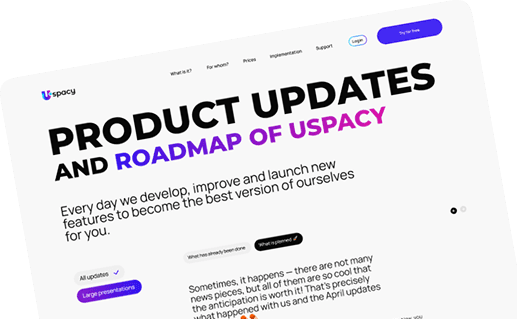
Uspacy is improving and developing at an incredible speed
Learn about product development plans
Uspacy roadmap 🚀